The Challenge
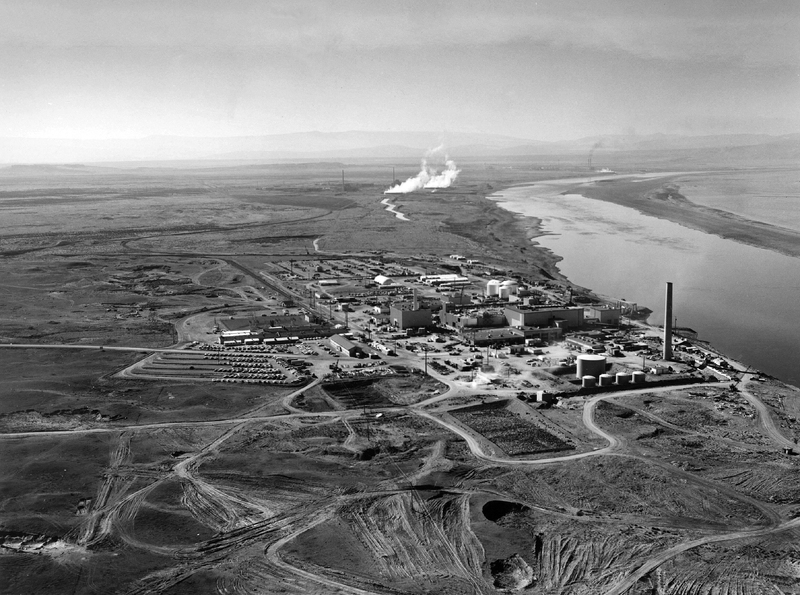
The Hanford Site in eastern Washington—chosen in 1943 as part of the Manhattan Project for plutonium production—created extensive groundwater contamination from decades of nuclear operations. Between 1944 and 1987, eight reactors used Columbia River water for cooling, with sodium dichromate added as a corrosion inhibitor.
The contamination scale: 2.0 km² plume with peak hexavalent chromium concentrations reaching 55,600 µg/L—more than 500 times the EPA drinking water standard.
Natural leakage from underground piping and accidental spills sent concentrated sodium dichromate solutions into soil, gradually moving downward toward the Columbia River. The site needed a proven, cost-effective treatment technology capable of operating reliably for decades.
Initial Approach
Early pilot testing in the 1990s evaluated various ion exchange resins, ultimately selecting Type I strong base anion resin. Full-scale facilities began operations in 1997:
- 400 gpm plant (HR-3) treating the D and H reactor areas
- 200 gpm plant (KR-4) treating the K reactor area
- Closed-loop system: extract contaminated groundwater, treat via ion exchange, return to injection wells
While functional, the strong base resin approach required costly offsite regeneration, extensive sampling protocols, and complex logistics for handling potentially radioactive materials.
The Solution
In 2008, with expansion plans underway, a comprehensive bench-scale evaluation tested alternative resin technologies to improve performance and reduce costs. Over nine months, seven different resins were evaluated using a custom test skid with one-inch diameter columns.
The Discovery
ResinTech SIR-700-HP, an epoxy polyamine resin tested at reduced pH (5), showed exceptional chromate affinity. The initial test column lasted the entire nine-month duration without nearing capacity—shifting the evaluation's focus entirely.
Testing revealed the epoxy polyamine resin had more than an order of magnitude greater capacity than any other resin tested. Further testing with smaller bed depths still couldn't exhaust the resin's capacity.
How It Works
The mechanism: ion exchange followed by reduction within the resin matrix, with precipitation inside the resin structure. Analysis showed more than 90% of chromium on the resin was in the stable trivalent form rather than hexavalent—confirming the capacity advantage comes from more than simple adsorption.
pH optimization testing established the optimal operating range of 5.5 to 6.5 for maximum chromate removal efficiency.
System Design
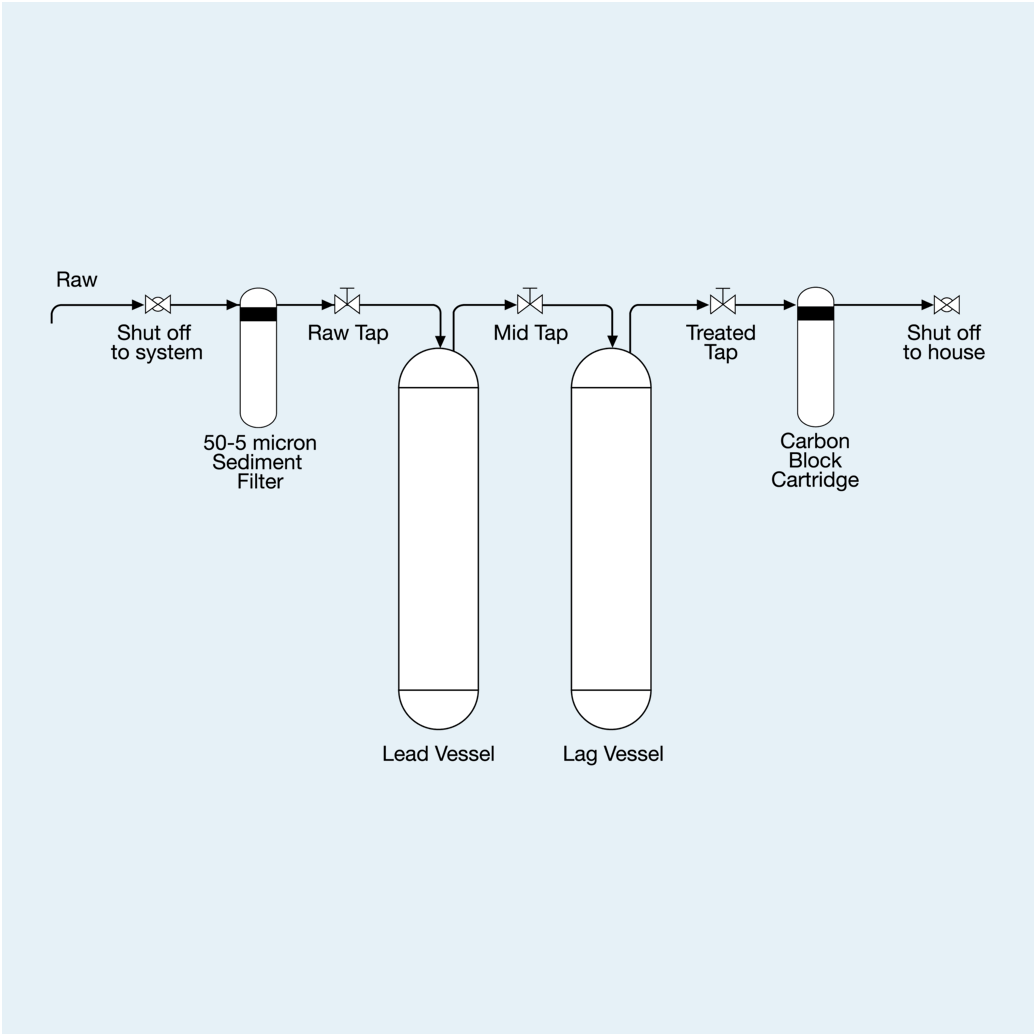
The modular approach uses groups of four 80 ft³ vessels ("trains") rated at 100 gpm, operating in lead-lag1-lag2-polish configuration:
- Lead vessel removed when saturated or polish vessel shows breakthrough above 10 µg/L
- Vessels rotate forward automatically in treatment sequence
- Consistent design between facilities enables cross-site operational flexibility
- Capacity expansion via additional trains rather than larger vessels
The Results
ResinTech SIR-700-HP was implemented in the newest pump and treat facility near the D area in summer 2010. After initial optimization of pH control protocols, the system achieved stable operation with chromium leakage limited to the lead vessel, dropping below detection limits (5 µg/L) within two months.
Performance
40,000+ bed volumes processed, removing 138+ kg of chromium with no signs of approaching capacity
Cost Savings
$20 million saved over 11-year facility lifespan—equal to construction cost
Capacity Advantage
10x greater capacity than conventional strong base resins
Operational Simplicity
No offsite regeneration logistics or complex waste handling
Economic Impact
Life cycle cost analysis compared four scenarios:
- Strong base resin with offsite regeneration (baseline)
- Strong base resin with combined on/offsite regeneration
- Strong base resin with onsite regeneration only
- Single-use epoxy polyamine resin
The single-use epoxy polyamine approach proved most cost-effective, saving nearly $20 million through:
- Eliminated offsite regeneration logistics and processing
- Dramatically extended resin life reducing replacements
- Avoided capital investment in onsite regeneration equipment
- Simplified operations requiring less specialized labor
- Reduced chemical consumption and waste generation
Environmental Advantages
Simplified Waste Management
Onsite disposal eliminates transportation risks and offsite regeneration waste streams. Later resin samples with even higher chromium loading met disposal requirements without stabilization treatment.
Reduced Risk Exposure
Single-use operation eliminates transporting radioactive materials offsite for regeneration, significantly reducing risk and regulatory burden.
System Evolution
By 2009, pump and treat capacity in the K reactor area had grown from 200 gpm to 1,100 gpm. The latest expansion near the H reactor is replacing the original IX system with an 800 gpm facility using the proven epoxy polyamine approach.
Technical Specifications
| Parameter |
Specification |
| Product |
ResinTech SIR-700-HP |
| Resin Type |
Epoxy Polyamine (weak base anion exchanger) |
| Physical Form |
Tough, uniform granules (12-30 mesh, nominal) |
| Operating pH |
5.5 - 6.5 (optimized for chromate removal) |
| Capacity |
>40,000 bed volumes (>10x conventional resins) |
| Service Flow Rate |
2-4 gpm per cubic foot |
| Vessel Configuration |
Lead-Lag1-Lag2-Polish (4-bed series) |
| Standard Vessel Size |
80 ft³ capacity per vessel |
| Train Capacity |
100 gpm per 4-vessel train |
| Chromium Removal |
Influent: 325-55,600 µg/L; Effluent: <5 µg/L |
| Regeneration |
Single-use (no regeneration required) |
| Disposal |
Onsite disposal; stable chromium binding |
Key Takeaways
- Proven at Scale: Over 15 years of continuous operation across multiple facilities, from 200 gpm pilot scale to 1,100+ gpm full-scale
- Superior Economics: $20 million in savings compared to regenerable alternatives—equal to facility construction cost
- Exceptional Capacity: More than 10x the capacity of conventional strong base resins through unique ion exchange plus reduction mechanism
- Operational Simplicity: Minimal pH adjustment, no offsite regeneration, straightforward disposal protocols
- Environmental Benefits: Eliminated transportation risks, reduced waste generation, stable chromium binding
- Modular Scalability: Flexible four-vessel train design proven across varied flow rates and contamination levels